
Cyber Resilience Act: How Trust Becomes a Competitive Advantage
CRA – another compliance burden? Maybe we’re looking at it the wrong way. The Cyber Resilience Act is not only about compliance. It’s about trust. And trust is becoming a key competitive factor. Learn why the Cyber Resilience Act is more than regulation and how Security by Design and decentralized identities can help organizations build…
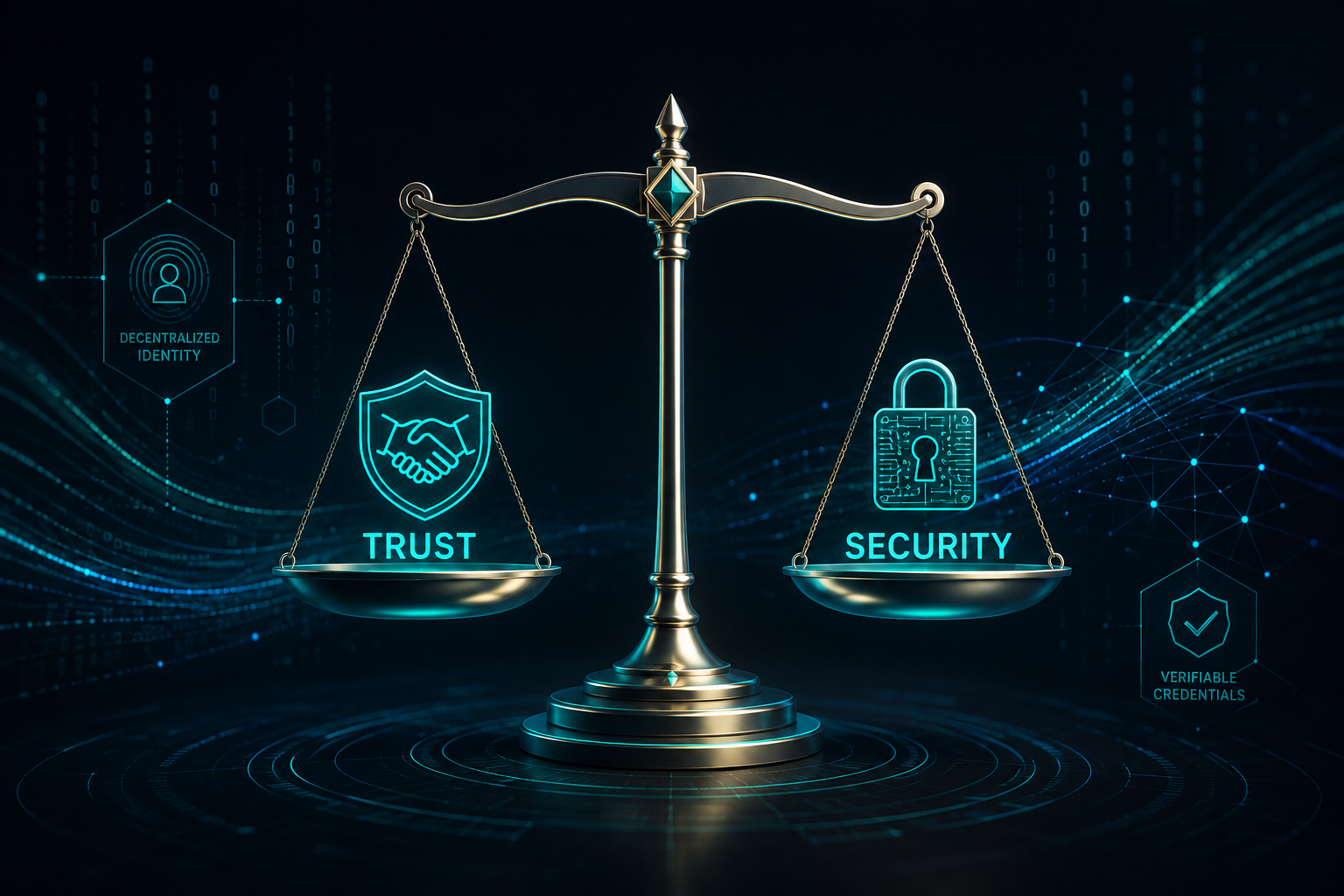
CRA – Another compliance burden?
Starting in December 2027, products with digital elements placed on the European market will be required to meet mandatory cybersecurity requirements. With the Cyber Resilience Act (CRA), the European Union is establishing a new standard for the development, operation, and maintenance of digital products.
Many organizations initially view this regulation as yet another compliance burden. However, that perspective misses the bigger picture. Companies that address the CRA early and strategically can turn regulatory requirements into a competitive advantage. Modern cybersecurity is no longer just about compliance—it is increasingly becoming a key differentiator.
Compliance Alone Is Not Enough
Organizations that simply “check the box” on CRA requirements will struggle to realize their full potential. The real difference lies in mindset: moving away from reactive compliance toward Security by Design and long-term value creation.
This reflects the underlying purpose of the Cyber Resilience Act: building trust in digital products. From the customer’s perspective, security, transparency, and reliability should become the norm rather than the exception. Companies that integrate security early and consistently create that trust—and ultimately benefit from it themselves. Trust reduces uncertainty, strengthens customer relationships, and is becoming an increasingly important competitive factor.
Organizations that embrace security from the beginning benefit in multiple ways:
- Increased trust among customers and partners
- Reduced risks and liability costs
- Secured market access
- More efficient development and maintenance processes
- Security becoming part of the product’s value proposition
The key question is therefore not whether organizations need to comply with the CRA—but how.
Security by Design Becomes the New Standard
One of the core principles of the Cyber Resilience Act is Security by Design. Security can no longer be treated as an afterthought—it must become an integral part of the architecture from the start.
This includes:
- Secure-by-default configurations
- Regular security updates
- Minimizing attack surfaces
- Strong authentication mechanisms
- Structured processes throughout the product lifecycle
As a result, the CRA goes far beyond technical implementation. Processes, documentation, and organizational structures are becoming equally important.
The Real Challenge Is Complexity
Many organizations underestimate the effort required to implement the CRA.
In addition to technical requirements, companies must address:
- Lifecycle-wide risk assessments
- Software Bills of Materials (SBOMs)
- Vulnerability management processes
- Secure update mechanisms
- Compliance documentation and audit evidence
Traditional architectures often struggle with these requirements. Complex certificate infrastructures, centralized dependencies, and manual processes can make implementation costly and difficult to scale.
A Different Approach: Identities Instead of Additional Security Layers
At filancore, we take a different approach.
Rather than adding security as an extra layer, we equip devices and systems with their own cryptographically secured identities from the outset. These decentralized identities, based on Self-Sovereign Identity (SSI) principles, establish trusted communication and enable Security by Design at the architectural level.
This approach provides several advantages:
- Devices and systems can uniquely identify each other
- Access rights can be managed dynamically and with fine granularity
- Single points of failure are eliminated
- Secure defaults are built in from the beginning
- Interactions remain transparent and verifiable
Security is no longer an additional layer—it becomes an inherent part of the solution. This creates not only technical protection but also the foundation for trusted products, trusted data, and trusted digital interactions.
Documentation and Traceability Become Key Success Factors
One often underestimated aspect of the CRA is technical documentation. It becomes the foundation for demonstrating compliance.
Important elements include:
- Risk assessments
- Vulnerability management processes
- Test and standards documentation
- Software Bills of Materials (SBOMs)
- Documentation of updates and changes
Today, many of these processes are still highly manual.
By leveraging digital, verifiable identities and traceable interactions, many compliance-related processes can be automated and made audit-ready. This reduces effort while simultaneously improving the quality and reliability of compliance.
Rethinking Vulnerability Management
The CRA requires organizations to establish structured vulnerability management processes.
Security incidents must be reported, assessed, and documented within strict timelines. At the same time, users must be informed transparently and updates must be delivered reliably.
In large IoT environments, this quickly becomes complex.
With unique device identities, vulnerabilities can be accurately assigned, updates securely distributed, and changes fully documented. Vulnerability management becomes a controlled and scalable process rather than a constant operational challenge.
Why Decentralized Identities Matter
Decentralized identities are not an end in themselves. They solve concrete challenges in modern digital products and provide the foundation for trusted digital ecosystems.
Ultimately, cybersecurity is not just about preventing attacks—it is about establishing trust in devices, data, and communication.
Decentralized identities enable:
- Passwordless authentication
- Elimination of centralized points of failure
- Secure and verifiable OTA updates
- Rapid response to security incidents
- Data sovereignty and privacy
- Flexible access control and key rotation
They provide a strong foundation for Security-by-Design architectures and trusted digital ecosystems.
When Security Becomes a Competitive Advantage
Security by Design is not just about meeting regulatory requirements—it creates measurable business value.
In a smart healthcare project, high security requirements had to be combined with ease of use and economic scalability.
By leveraging filancore’s technology, it was possible to:
- Significantly reduce maintenance efforts
- Minimize security risks
- Shorten time-to-market by up to 45%
- Strengthen trust among users and partners
Security became more than a cost factor—it became a clear competitive advantage.
Conclusion: The CRA Is More Than Compliance
The Cyber Resilience Act is not just another compliance initiative. It is a catalyst for better, safer, and more resilient digital products.
Its ultimate purpose is to strengthen trust in digital products and digital markets—and that is precisely where the opportunity lies.
Organizations that establish the right foundations today will secure market access, reduce risks, and build trust with customers and partners.
At filancore, we see the CRA not as a burden, but as an opportunity. Through decentralized identities and modern Zero Trust architectures, we help organizations turn Security by Design into a strategic advantage.
Because the real question is not whether security matters.
The question is how early organizations start making trust an integral part of their products and business models.